

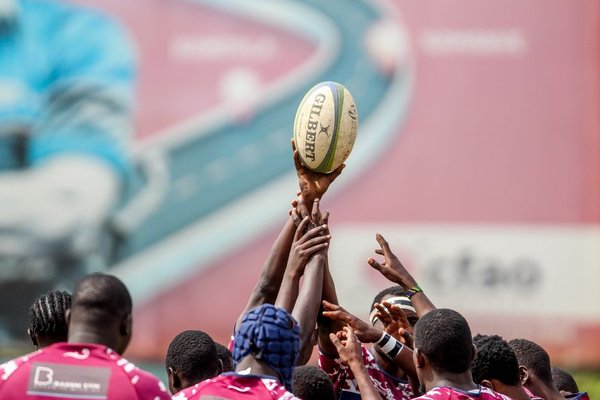
A rugby team can look like a moving crowd until you learn what the shirt numbers mean. Suddenly, a scrum becomes an organised contest and a sweeping attack has a clear pattern. Understanding rugby positions is the quickest way to see how a team functions rather than simply following the ball.
This guide covers the standard 15-a-side rugby union game. Each team starts with eight forwards and seven backs. Rugby league and rugby sevens use different team structures.
Rugby Shirt Numbers at a Glance
In rugby union, the starting shirt number usually identifies a specialist role. Numbers 1–8 belong to the forwards: the front row, locks and back row. Numbers 9–15 belong to the backs: half-backs, centres, wings and full-back. Replacements are commonly numbered 16–23, although squad arrangements can vary.
Think of the forwards as the group that wins and protects possession, while the backs frequently use it to find space. Neither group works in isolation: forwards pass and run; backs tackle and support contact situations.
Forwards: Positions 1–8
1 and 3: Loosehead and Tighthead Props
The loosehead prop wears 1 and binds on the left of the hooker in the scrum; the tighthead wears 3 and binds on the right. They provide strength and stability against the opposing front row. An unstable scrum disrupts the team’s attacking platform, so props need specialist technique and coaching.
Outside scrums, props carry into contact, clear defenders away from rucks and support lineout lifters. They make repeated technical decisions under pressure.
2: Hooker
The hooker packs between the props and attempts to win the ball with the feet at the scrum. The hooker also normally throws into lineouts, so accuracy and timing matter as much as strength. A good throw gives jumpers a chance to secure possession; an inaccurate one can surrender an opportunity near the try line.
4 and 5: Locks
Also called second-row forwards, locks pack immediately behind the front row. They contribute pushing power in scrums and are often primary jumpers at lineouts, where height and coordination with lifters are valuable. In open play they tackle, carry and secure rucks. Watch how quickly a lock moves from a lineout catch into a driving maul.
6 and 7: Flankers
Flankers operate on the sides of the scrum and frequently lead the chase towards the next tackle. Number 6 is conventionally the blindside flanker and 7 the openside, though assignments vary between teams and regions. They need stamina, tackling judgment and the ability to contest possession legally at breakdowns.
Arriving first to protect a teammate’s ball can be just as important as a spectacular run.
8: Number Eight
The number eight packs at the back of the scrum, controlling the ball at its base and sometimes carrying directly from there. This player links the pack with the scrum-half and offers a carrying option near crowded defensive areas. Together, flankers and the number eight make up the back row.
Backs: Positions 9–15
9: Scrum-Half
The scrum-half bridges forwards and backs. After a ruck, number 9 often retrieves the ball and chooses between passing, running or kicking. A crisp pass gives teammates time to attack; a slow decision gives defenders time to advance. The scrum-half also normally feeds the ball into a scrum.
10: Fly-Half
The fly-half frequently directs the attack, receiving passes from the scrum-half and deciding whether to distribute, kick for territory or challenge defenders. Position 10 demands awareness of defensive spacing, not just a strong kicking game. Many teams use the fly-half as their tactical organiser, but playmaking responsibilities can be shared.
12 and 13: Inside and Outside Centres
Number 12, the inside centre, often offers a direct running option or acts as a second distributor. Number 13, the outside centre, looks for space beyond central defenders and connects passes to the wings. Both must defend carefully: a mistimed rush from midfield can open a large gap outside.
11 and 14: Wings
The left wing usually wears 11 and the right wing 14. They are important finishers, using acceleration and positioning to exploit space near the touchlines. Wings also chase kicks, tackle and cover behind the defensive line. A wing who reads a kick early may prevent a try.
15: Full-Back
The full-back generally covers space behind the main defensive line, catches high balls and judges when to counterattack or kick. Good positioning is essential because a poor read can leave the team exposed. In attack, number 15 may join the line as an extra passing or running option.
How Rugby Roles Work Together in a Match
Consider a team awarded a lineout near halfway. The hooker throws, the locks compete for the catch, and nearby forwards protect the ball. The scrum-half moves it away, the fly-half chooses a direction, and the centres draw defenders before a wing attacks the outside. If the ball carrier is tackled, support players from either group arrive to maintain possession.
That passage explains why rugby player positions matter tactically. The set piece creates a starting platform, but the next decision belongs to whoever reaches the relevant space first. A prop might make the decisive pass; a centre might secure the ruck.
For additional context, look for the related guides scrum and lineout basics, rugby attacking patterns, and breakdown rules. Each explains a different piece of that movement.
How to Read Positions While Watching Rugby
Instead of tracking all 15 players, locate numbers 9 and 10 after a tackle. Observe where the forwards gather to protect the ball and where the backs position themselves to receive it. Then look behind the defensive line for number 15. Those observations reveal much of the team’s structure.
Rugby shirt numbers indicate starting roles, not fixed zones. A wing can appear in midfield, a flanker can carry out wide, and a fly-half can shift away from first receiver. Modern tactics depend on these exchanges, while set pieces still demand specialist organisation.
Frequently Asked Questions
How many positions are there in rugby union?
A standard rugby union starting team has 15 positions: eight forwards and seven backs. Rugby sevens and rugby league use different numbers of players.
What is the difference between forwards and backs?
Forwards usually take primary responsibility for scrums, lineouts and much of the contest around contact. Backs generally organise attacks in open space, manage territory and defend wider channels. Their duties overlap during play.
What position does number 10 play?
Number 10 is the fly-half, a key decision-maker who often controls attacking direction through passing, running and tactical kicking.
Can rugby players change positions during a match?
Players can perform different roles in open play and may switch assignments when appropriate. However, specialist set-piece duties, especially in the front row, require suitably trained players and adherence to competition rules.
Putting the Numbers Into Perspective
Learn rugby positions by connecting each number with a job, then watching how that job changes after the ball moves. Props establish stability, the hooker and locks help secure set-piece possession, the back row competes relentlessly, and the backs turn opportunities into territory or tries. Once you recognise those relationships, even complex phases become easier to follow.