

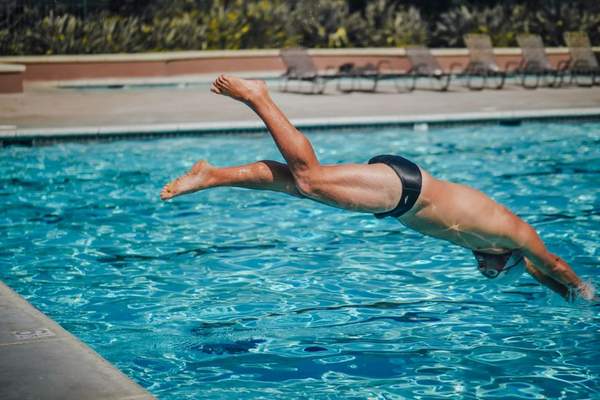
A dive can go wrong before the first somersault begins. Takeoff is the short transition from supported balance to free flight, and it determines how much lift and control the diver can carry into the movement. Effective diving takeoff technique is not simply about jumping higher. It also establishes direction, body alignment and safe clearance from the board or platform.
When departure is rushed or uneven, the problem may only become obvious during rotation or entry. Learning to recognise the earlier cause makes technical corrections much more useful.
How Takeoff Shapes the Whole Dive
The instant the feet leave the surface, the diver already has an initial direction of travel and angular momentum. Changing from straight to tuck or pike can affect rotation speed in the air, but it cannot recreate a missed push or fully fix a poor flight path.
Good lift provides time for the intended skills without sacrificing control. Too little outward movement may reduce clearance; too much may make the entry difficult. The appropriate path varies by dive, so height and distance should be considered together.
Build Diving Balance Before Adding Power
For a standing takeoff, the athlete needs stable pressure through the feet, an organised trunk and a head position that supports the intended body line. Leaning prematurely toward the water or sitting heavily back on the heels makes an efficient push harder.
During a forward approach, balance moves with the athlete. Consistent steps prepare the final contact. A sudden correction in the last step can introduce sideways motion that continues after leaving the apparatus.
Connect the Arms, Legs and Trunk
The legs contribute to propulsion, but the arms and trunk help organise the movement. An uneven arm swing or collapsing hip position may redirect the flight. Rather than trying to jump harder, look for coordinated leg extension, balanced shoulders and a continuous movement away from the surface.
Springboard Takeoff: Timing the Rebound
A springboard bends under the diver’s load and rises again, returning stored energy. A well-timed springboard takeoff coordinates the diver’s push with this rebound. Muscular strength alone cannot compensate for continually mistiming the board.
During a forward approach, the hurdle moves from a one-foot takeoff to a two-foot landing near the board’s end. That landing must remain balanced so the athlete can use the board’s motion. Rushing through its bend or becoming passive as it rebounds can interrupt the sequence.
Backward and inward standing takeoffs have different mechanics. An arm swing and leg press are coordinated with the springboard’s movement, without copying the rhythm of a forward running approach.
What to Observe at the Board Tip
Watch where the feet land, whether they arrive together, how the knees track and whether the shoulders stay level. These clues often explain inconsistent lift more clearly than the jump’s apparent height. Springboard hurdle technique deserves separate practice when the approach itself is unreliable.
Platform Takeoff: Lift Without a Flexible Surface
Unlike a springboard, a platform does not bend. Platform takeoff technique therefore relies on the athlete’s coordinated muscular push rather than a timed rebound. The arms and legs may move with a different rhythm, and copying springboard timing can lead to an awkward departure.
Running and standing platform takeoffs require distinct preparation. Neither removes the need for appropriate clearance or a controlled flight line. An athlete should learn these movements through coaching and suitable progressions, not by experimenting with complex dives at height.
Understand the Relationship Between Lift and Rotation
Divers sometimes rush into a tuck because they are concentrating on the somersault. But folding early does not replace a sound takeoff. Rotation has to be created and managed in a way that matches the dive, while the initial push still produces the necessary flight path.
In basic progressions, a tall, well-aligned departure can help develop reliable control. More advanced dives require carefully coordinated actions that create the intended angular momentum. Body position during diving then changes rotation speed, but works best when the launch is predictable.
A Practical Example: Diagnosing Sideways Drift
Suppose a diver consistently travels left after a forward springboard hurdle. Rather than making a correction midair, a coach can review the approach and final contact on video from the front and side.
Does the final step track straight? Do both feet meet the board together? Does one shoulder rise first? If the drift begins before departure, the cause probably lies in the approach or takeoff rather than the entry.
Repeat an appropriately simple progression while changing only one factor, such as approach rhythm. That makes improvement measurable and avoids confusing a stronger jump with a better-controlled one.
Three Takeoff Mistakes Worth Correcting
Excessive Bending Without Control
A deeper knee bend does not automatically produce more height. If the trunk collapses or timing changes, the extra motion may reduce stability. A coordinated press is more valuable than exaggerating the movement.
Moving the Head Too Early
Premature head movement can affect alignment and the start of rotation. Head position should be chosen for the particular dive under coaching guidance, rather than following a universal instruction to look up or down.
Using One Rhythm for Every Apparatus
A backward press, forward springboard hurdle and rigid-platform jump do not share identical timing. Repeating the wrong pattern can make an error feel familiar without making it correct.
Practise Through Safe, Simple Progressions
Start with posture, stable foot pressure and coach-approved arm and leg drills on land. Move to simple jumps and basic dives at an appropriate facility, progressing only when straight tracking, predictable balance and safe clearance are established.
Brief video reviews can compare the final instant of contact with the first moment of flight. Do not evaluate takeoff solely by splash size or how high it appears. Diving entry alignment is another useful topic to study as control improves.
Unfamiliar takeoffs and advanced rotations should never be practised alone. A qualified coach must consider water depth, apparatus settings, equipment and the athlete’s skill before selecting drills.
Frequently Asked Questions
What matters most in diving takeoff technique?
Balance, coordinated arm and leg action, appropriate lift and safe clearance matter most. The precise timing depends on the dive and surface.
Why is my springboard takeoff inconsistent?
Changes in hurdle rhythm, foot placement or rebound timing can produce different launches. Review controlled repetitions with a coach rather than only pushing harder.
Is platform takeoff easier than springboard takeoff?
Neither is universally easier. The platform removes rebound timing but requires lift from a rigid surface. Both demand good body control.
Should height come before learning rotation?
Establish a reliable, safe departure through basic progressions first. A coach can then introduce appropriate rotational skills without sacrificing control.
Make the First Moment Count
The strongest-looking takeoff is not always the most effective. A useful departure places the diver on a predictable path with sufficient lift, deliberate rotation and safe clearance. Build balance and timing before chasing extra power, and the rest of the dive begins on firmer technical ground.