

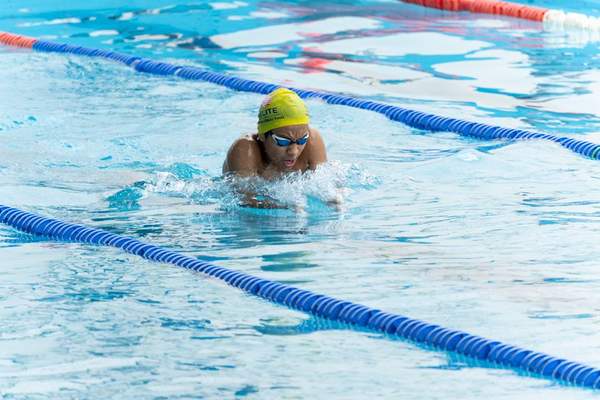
Breaststroke can look calm from the pool deck, yet it demands some of the most precise coordination in competitive swimming. Unlike freestyle, its arm and leg recoveries happen largely in the water, where small movements create noticeable drag. Efficient breaststroke technique is therefore less about pulling harder and more about sending each burst of propulsion through a streamlined body.
The essentials fit together in one rhythm: pull, breathe, recover, kick, and glide. Learn what each phase should feel like, then adjust how quickly they connect for your race.
Build a Body Line That Keeps Speed
Start each cycle stretched forward, hands close together, eyes angled slightly down, and hips near the surface. The head, trunk, and legs should return to a narrow line after every kick. Your body rises during the breath, but lifting the chest too high makes the hips sink.
Think of the stroke as brief accelerations followed by controlled travel. You need not stay perfectly flat; you need to regain a clean line quickly.
Breaststroke Pull: Catch Water Without Overpulling
From the forward position, pitch the hands slightly outward and begin a compact sweep. Angle the forearms to press water backward and inward, bringing the hands together in front of the chest. Recover both hands forward directly rather than pushing them toward the stomach.
A wider pull can feel powerful while slowing recovery. Keep the action in front of the shoulders, elbows relatively high during the catch, and hands close enough to shoot forward smoothly. In competition, the hands must not pass the hips during ordinary surface strokes.
As the hands sweep inward, allow the mouth to rise for a quick breath. Then send the fingertips forward and let the head settle between the arms. The breaststroke pull sets up the next kick; it should not leave the torso upright.
Breaststroke Kick: Create Drive Without Wide Knees
The breaststroke kick uses a heel recovery, outward foot rotation, and a forceful backward press. Draw the heels toward the outside of the hips while keeping the knees reasonably narrow. Turn the feet outward so their inside surfaces can press against the water, sweep backward and together, and finish with extended legs.
Swimmers often spread their knees because the motion feels bigger. That exposes more thigh area to oncoming water. Recover the heels quickly instead, without swinging the thighs far forward beneath the torso.
Do not force uncomfortable foot rotation. Ankle and hip mobility vary; knee pain is a reason to stop and review technique with a coach.
Breaststroke Timing: Connect Pull, Breath, and Kick
The cue “pull, breathe, kick, glide” describes the order, but the movements connect rather than being separated by long pauses. Pull while the legs remain extended. Inhale as the hands finish sweeping inward. As the hands move forward, recover the heels; complete the kick as the upper body reaches its long position.
A powerful kick delivered with the shoulders still high wastes energy pushing a high-drag shape. Likewise, pulling while the knees are moving forward reduces the benefit of the arm action.
Try this during a moderate 25-metre swim: feel the kick finish just as your hands reach forward, then notice whether you travel briefly before the next catch. If everything feels frantic, slow the stroke enough to separate each movement’s job.
How Much Glide Is Enough?
The glide helps only while you carry speed. After the feet come together, remain narrow and resist starting another pull immediately. But do not hold the glide until nearly stopped.
In a 50-metre race, skilled swimmers generally use a quicker turnover and shorter glide than in a controlled 200-metre swim. The right duration depends on your speed, strength, and distance. Treat the glide as a transition, not a rest break.
Breathe Without Turning the Stroke Into a Bounce
Exhale into the water between breaths, then inhale when the arm action naturally brings your mouth above the surface. Look slightly forward and down, not toward the ceiling. As the arms extend, return the face to the water so the hips can rise.
If breathing feels rushed, review the head’s timing rather than pulling harder. Swimming breathing drills can build comfort with steady exhalation, although breaststroke requires its own distinctive head movement.
Starts, Turns, and the Underwater Pullout
Race-legal breaststroke includes special movements after a start and each turn. A swimmer may take one arm pull back to the legs and use one butterfly kick before the first breaststroke kick. The head must break the surface before the hands turn inward at the widest point of the second arm stroke. The surface cycle follows one arm stroke and one leg kick in that order.
At turns and finishes, both hands must touch simultaneously and separately, not stacked. Practice wall approaches and pullouts with a qualified coach; swimming turns and underwater skills deserve dedicated sessions.
Drills That Reveal Where You Lose Speed
Useful drills connect a technical focus with something you can observe. Start with 4 × 25 metres of streamlined kicking, resting enough to maintain form. Focus on narrow heel recovery and a crisp finish with both legs together.
Next, swim 4 × 25 metres of complete breaststroke at moderate effort. Alternate emphasis between quick hand recovery and finishing the kick in a long body line. Record each time and stroke count. Fewer strokes are not automatically better if your time rises sharply.
Finally, ask a coach to film a side-on length. Look for knees dropping beneath the hips, a head held high after breathing, or a pause before the kick finishes. Fix one issue at a time. A comparison with freestyle swimming technique also reveals how costly underwater recoveries can be.
Frequently Asked Questions
What is the correct order for breaststroke technique?
Use one arm pull followed by one leg kick in each regular cycle. Coordinate the breath with the pull, extend the hands, finish the kick, then streamline briefly.
Should the knees stay together during the breaststroke kick?
Not completely. The knees separate enough for a comfortable, effective kick, but excessive width increases drag. Aim for a compact recovery with heels moving toward the hips.
Why do I slow down between strokes?
Common causes include gliding too long, keeping the chest high during the kick, and overlapping arm and leg recoveries. Side-view video and timed 25-metre repeats can expose the main problem.
Is a dolphin kick allowed in competitive breaststroke?
One butterfly kick is permitted after the start and each turn before the first breaststroke kick. Additional downward butterfly kicks are not allowed during ordinary surface cycles.
Putting the Stroke Together
Progress often comes from removing resistance rather than adding effort. Refine the catch, recover the heels without spreading the knees, breathe without lifting too high, and finish the kick in a clean line. Once those pieces are reliable, adjust turnover and glide for race pace. Efficient breaststroke is a rhythm you can repeat.