

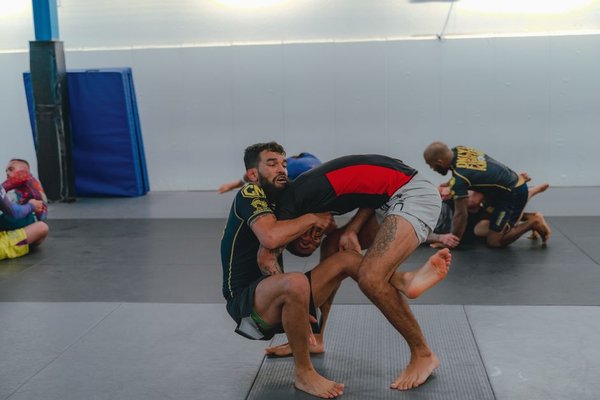
Put a Brazilian jiu-jitsu practitioner and a wrestler on the same mat, and they may agree about one thing: controlling another person is hard. Their plans for achieving that control, however, can look very different. Wrestling generally rewards takedowns, top control, and preventing escapes. Brazilian jiu-jitsu (BJJ) makes room for those skills while treating guard work and submissions as central parts of the contest.
That distinction explains much of the brazilian jiu jitsu vs wrestling debate. Neither style has a universal advantage. The rules, starting position, and athlete’s experience determine which skills matter most.
The Biggest Difference Is What Each Sport Rewards
Wrestling is built around positional dominance, takedowns, and, in many formats, exposing or pinning an opponent’s shoulders. Wrestlers develop entries, balance, pressure, and an instinct to stay off their backs.
BJJ aims to improve position and secure a submission, such as a choke or joint lock. Practitioners can attack from the top or threaten an opponent from underneath using guard. In many tournaments, a submission ends the match regardless of the points scored.
Think of wrestling as asking, “Can I put you down and control you?” BJJ adds another question: “From here, can I make you submit?”
Takedowns: A Shared Skill With Different Emphasis
Wrestling devotes considerable training time to standing exchanges. Single-leg and double-leg attacks, snaps, sprawls, underhooks, and chain wrestling become second nature. When one takedown attempt fails, experienced wrestlers transition immediately into another.
BJJ includes throws and takedowns, but class time is also divided among guard retention, sweeps, passing, escapes, and submissions. Some competitors pull guard instead of fighting through a prolonged standing exchange.
Imagine a wrestler shooting a double-leg takedown against a BJJ player. If the wrestler finishes and settles on top, an important objective is achieved. But if the BJJ player establishes closed guard, the exchange continues: sweeps, chokes, and transitions remain available. The wrestler now needs more than takedown skill to stay safe.
Ground Control: Pins, Guard, and Escapes
How Wrestlers View Bottom Position
In wrestling, being underneath usually means losing control or risking exposure. Athletes learn to build a base, hand-fight, stand up, reverse position, and avoid having their shoulders turned toward the mat. A tight ride from the top can lead to scoring or a pin.
Why BJJ Practitioners Use Guard
In BJJ, lying on your back is not automatically a losing position. Guard uses the legs, grips, frames, and angles to limit movement. From there, an athlete may sweep, recover space, or set up a submission.
That does not mean bottom position is always desirable, especially when punches are allowed. The central distinction in this jiu jitsu wrestling comparison is that BJJ develops a broader offensive game from underneath.
Scoring Rules Change the Strategy
Under common International Brazilian Jiu-Jitsu Federation rules, a qualifying takedown, sweep, or knee-on-belly position scores two points; a guard pass scores three; and mount or back control scores four. Positions generally require three seconds of stabilization. Other BJJ organizations use different systems, including submission-only formats.
Wrestling scoring varies by discipline. International freestyle rewards takedowns, exposure, throws, and other actions, with a pin ending the match. American collegiate folkstyle wrestling also rewards escapes, reversals, and near falls; NCAA takedowns have been worth three points since the 2023–24 season.
These rules create distinct habits. A wrestler may prioritize keeping an opponent flat. A BJJ competitor may deliberately move through guard to set up an attack. Neither choice can be judged without knowing the competition format.
Submissions Are the Clearest Technical Divide
BJJ routinely includes chokeholds and joint locks, with permitted techniques depending on competition rules, belt level, and age. Recognizing threats and escaping bad positions are essential parts of training.
Sport wrestling does not award victories for chokes or joint locks. Wrestlers may excel at scrambling and pinning without knowing how to defend a triangle choke or armbar. Conversely, a skilled BJJ practitioner may struggle to take down someone with years of wrestling experience.
Cross-training closes gaps. Wrestlers can learn submission awareness and guard passing, while BJJ students can improve stance, hand-fighting, shot defense, and standing escapes.
BJJ vs Wrestling for MMA
Mixed martial arts changes the calculation because strikes, the cage, rounds, and judging influence grappling choices. Wrestling for MMA helps determine where a fight takes place. A wrestler may finish takedowns, defend attempts, work against the fence, or return an opponent to the mat.
BJJ contributes submission threats, transitions, and escapes. Yet a guard strategy that works in a grappling tournament can become dangerous when an opponent can strike from above.
Effective MMA grapplers blend the two grappling styles. A wrestler must respect guillotines while shooting. A BJJ specialist needs takedown defense, wall-walking, and ways to regain the feet. Both must understand how punches change posture and distance.
Try this drill: start with one athlete attempting a takedown, then continue for thirty seconds after the finish. The top athlete maintains safe posture and improves position; the bottom athlete recovers guard, sweeps, or stands. It connects standing exchanges with the ground skills that follow.
Which One Should You Train First?
Choose wrestling if you enjoy takedowns, fast scrambles, pressure, and controlling where an exchange happens. Choose BJJ if submissions, guard techniques, and positional puzzles appeal more.
Access matters too. Adults may find recreational BJJ classes more readily than beginner wrestling programs, although availability varies. A well-coached class with safe sparring is more useful than picking a style because someone claims it always wins.
For self-defense or MMA, learning to stay standing, escape from underneath, and recognize submissions is better than treating either discipline as complete on its own. A beginner’s guide to takedown defense, an explanation of BJJ scoring, and wrestling fundamentals for MMA are useful topics to explore next.
Frequently Asked Questions
Is wrestling better than Brazilian jiu-jitsu in a fight?
Not automatically. Wrestling often helps with takedowns and top control; BJJ adds specialized submission skills. Striking ability, rules, size, conditioning, and individual experience can change the outcome.
Can a wrestler beat a BJJ black belt?
It is possible, but labels alone cannot predict the result. Under BJJ rules, submission knowledge matters greatly; under wrestling rules, takedown and pinning experience matter more.
Does BJJ teach takedowns?
Yes. Takedowns and throws are part of BJJ, although their training frequency varies by academy. Students seeking stronger stand-up skills can attend dedicated wrestling or judo sessions.
Should MMA beginners learn BJJ or wrestling?
Both are valuable. Start with accessible, high-quality coaching, then address missing skills. MMA-specific practice is essential because striking and cage work change grappling decisions.
Final Thoughts
Brazilian jiu-jitsu and wrestling are complementary, not competing answers to the same problem. Wrestling excels at reaching dominant positions and resisting control. BJJ expands what happens after contact, particularly through guard work and submissions. Understand the rules, train your weaker situations, and the question shifts from which style wins to which skills you need.