

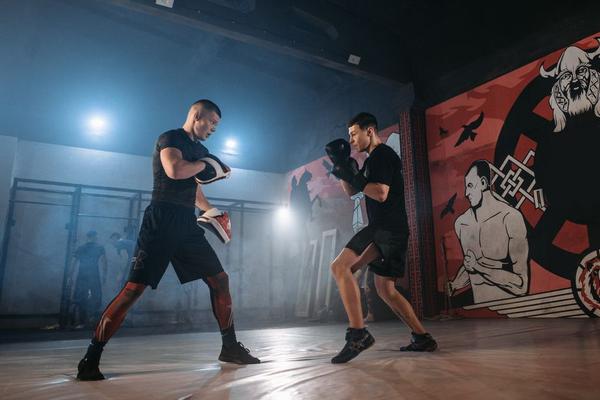
Good boxing footwork is less about moving fast than arriving in the right place with your balance intact. A quick punch means little if your feet leave you leaning forward, trapped near the ropes, or unable to defend a counter. The best boxing footwork drills teach you to change distance and angle without abandoning your stance. You can practise most of them with floor tape, a little space, and a few focused rounds.
Build a Stance You Can Move From
Start with one foot forward and the other behind, with enough width between them to feel stable. Keep your knees relaxed, your weight controlled between both legs, and your hands in guard. Orthodox boxers usually lead with the left foot; southpaws usually lead with the right. Avoid placing both feet on one straight line, which makes sideways movement less secure.
Before every drill, try a simple test: freeze after a step. Could you throw a balanced jab, move again, or defend immediately? If you need to hop or rearrange your feet, shorten the movement.
Practical Boxing Footwork Drills
1. Step-and-Slide in Four Directions
Place two tape marks on the floor to show your starting stance. Step forward with your front foot, then bring the rear foot forward enough to restore your usual spacing. To retreat, move the rear foot first and follow with the front. When moving sideways, the foot nearest that direction leads. Practise 30 seconds each way, quietly and without crossing your legs. This is the foundation of controlled ring footwork.
2. Side-Step and Reset
Imagine an opponent advancing along a straight line. Take one short step to the side, bring the other foot into position, and face the imagined opponent again. Repeat in both directions. Keep your shoulders relaxed and your guard up. The goal is to leave the line of attack, not to cover the greatest possible distance. Add a light jab only when your feet finish in balance.
3. Tape-Line Balance Check
Lay a strip of tape on a clear, non-slip floor to represent the opponent’s centre line. Move forward and backward beside it while maintaining your staggered stance. Pause unpredictably and check that your feet are still separated, your knees are soft, and your head is not drifting beyond your front knee. These simple boxing balance drills reveal whether you are reaching too far when closing distance.
4. Lead-Foot Pivot
Stand in your boxing stance facing a marker. Keep the lead foot lightly planted as a turning point, rotate on the ball of that foot, and reposition the rear foot so both feet face a new angle. Start with a modest turn rather than a dramatic spin. Your knee and toes should move comfortably together, without twisting against a stuck foot. Boxing pivot drills are especially useful for changing your line after a punch.
5. L-Step Exit
Take a small step backward, then move sideways to form an L-shaped route away from your original position. Bring the second foot along to recover your stance and turn to face the target. Practise the pattern slowly in both directions. The L-step is useful when backing straight up would keep you in an opponent’s path. Keep the movement compact so you can counter rather than continue retreating.
6. Clock-Face Movement
Picture yourself standing in the centre of a clock. Call out twelve, three, six, or nine and take one balanced step in that direction, then return to centre. Ask a training partner to call directions once the pattern feels comfortable, or use a shuffled list of cues. This drill adds decision-making to basic boxing movement drills. Accuracy matters more than reacting with a rushed, oversized step.
7. Rope-Side Escape
Use a tape line to represent the ropes; do not practise against an unstable barrier. Begin a short step away from the line, facing an imaginary opponent. Move sideways, pivot into open space, and reset your guard. Repeat from both sides. For a realistic challenge, throw a light jab before moving. The lesson is to create an exit early instead of waiting until you have nowhere left to retreat.
8. Movement-Only Shadowboxing
Set a timer for two minutes and shadowbox with very few punches. Work through a sequence: approach, pause in range, pivot away, retreat, and return from a different angle. Add a jab after each clean arrival. Imagine your opponent adjusting position whenever you move. This trains the connection between foot placement and tactical choices, which isolated patterns cannot fully reproduce.
Turn Footwork Into Offense and Defense
Consider a boxer who lands a jab while stepping forward, then remains directly in front of an opponent. Even a sharp jab may be followed by an easy counter. A more useful sequence is to step into range, jab without overreaching, then take a small angle or exit step while maintaining guard. The first movement creates the opportunity; the second manages the risk.
Practise that sequence against an imaginary target before adding a bag or pads. Related skills worth developing alongside footwork include a reliable boxing stance, jab technique, and defensive head movement. Footwork supports all three, but should never make your upper body rigid.
A Simple 15-Minute Footwork Session
Spend three minutes warming up with gentle steps and ankle movement. Follow with three minutes of step-and-slide practice, three minutes alternating pivots and L-steps, and three minutes of clock-face or rope-side escapes. Finish with three minutes of relaxed shadowboxing, combining the movements you can perform cleanly. Rest briefly when needed; there is no benefit in rehearsing poor technique while exhausted.
Practise on a dry, non-slip surface with enough room to move safely. Film a short round from the front and side if possible. Watch for crossed feet, an excessively narrow stance, or a rear foot that trails too far behind. Increase speed only after the movement remains controlled.
Frequently Asked Questions
What are the best boxing footwork drills for beginners?
Start with step-and-slide, side-step and reset, and controlled pivots. These establish stance, distance control, and directional changes before more complicated combinations.
How often should I practise boxing footwork?
Short sessions two or three times a week are a practical starting point. You can also add a few minutes of movement practice to regular boxing workouts, adjusting the volume to your fitness and recovery.
Do I need an agility ladder?
No. Tape marks, an imaginary opponent, and a timer are enough for meaningful practice. A ladder can add coordination challenges, but it cannot replace realistic stance and distance control.
Should I bounce constantly on my toes?
No. Stay ready to move, but avoid bouncing so much that your stance becomes unstable or your timing predictable. Use small, efficient steps and vary your rhythm when appropriate.
Make Every Step Purposeful
Progress in footwork often looks ordinary: fewer crossed steps, cleaner pivots, and less scrambling after a punch. Choose two boxing footwork drills that address your biggest weakness, practise them slowly, and test them during shadowboxing. When you can move, stop, punch, and defend without resetting your feet, your balance is starting to work for you.