

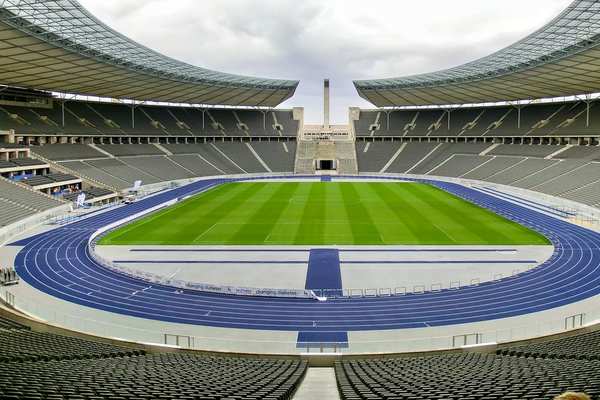
The Olympic stadium can change character in seconds. One moment, eight sprinters are waiting for the gun; the next, a pole vaulter is attempting a height that could decide a medal. Olympic track and field events bring together races, jumps, throws, and all-around contests under the broader sport of athletics. Understanding how they fit together makes the Games much easier to follow.
The core Olympic athletics events include short and long races, hurdles, relays, four jumping events, four throwing events, and combined competitions. The marathon and race walks also belong to athletics, even though they usually take place outside the stadium.
Olympic Running Events: From Explosive Sprints to Endurance
Sprints: 100m, 200m, and 400m
The 100 metres is the simplest test of outright speed: accelerate, reach maximum velocity, and hold form to the line. The 200m adds the challenge of running a bend, while the 400m requires athletes to distribute their effort over an entire lap. All three are contested by men and women.
For viewers, the final 100 metres of a 400m race is particularly revealing. A runner who looks dominant halfway through can fade as a rival finishes with better speed endurance. Comparing Olympic sprint events reveals why the fastest starter is not always the best one-lap racer.
Middle and Long Distances
The 800m and 1500m reward both speed and tactical judgment. Athletes may run cautiously before a fierce last lap, or push the pace early to exhaust competitors with stronger finishing kicks. Positioning matters because a runner boxed in near the rail may have to travel farther to escape. At 5000m and 10,000m, endurance takes on greater importance, although sprint finishes can still decide medals.
Hurdles and the Steeplechase
Hurdling is not simply sprinting with obstacles added. Rhythm between barriers determines whether an athlete can maintain speed. The Olympic program features the women’s 100m hurdles, men’s 110m hurdles, and 400m hurdles for both. In the shorter events, even a small interruption to the stride pattern can change the result.
The 3000m steeplechase is a distance race with barriers and a water jump. It combines endurance with the skill of clearing obstacles efficiently while surrounded by other runners. Unlike ordinary hurdles, its barriers are solid and do not tip over when struck.
Olympic Relays: Speed Becomes Teamwork
Relays are among the most dramatic events in the track and field Olympics because individual speed is only part of the equation. Four runners must coordinate their legs and pass a baton legally. A dropped baton or exchange outside the designated zone can undo an otherwise brilliant performance.
4x100m and 4x400m Relays
In the 4x100m relay, precise acceleration and baton changes are critical: runners aim to transfer the baton without losing speed. The 4x400m gives each athlete a full lap, creating more room for pacing decisions and dramatic shifts in the lead.
Men’s and women’s versions of both relays feature on the Olympic program. A mixed 4x400m relay, with two men and two women per team, was also contested at Paris 2024. Los Angeles 2028 is adding a mixed 4x100m relay, expanding the team-racing options.
A practical viewing tip: follow the baton rather than only the leading runner through each exchange. A team in second place can gain decisive ground with a cleaner handoff. Learning Olympic relay exchange rules makes close finishes easier to understand.
Olympic Field Events: Jumps and Throws
Four Jumping Disciplines
The high jump and pole vault ask athletes to clear a bar at increasing heights. The long jump and triple jump measure how far competitors travel from a takeoff board into a sandpit. Technique is different in each event: the triple jump, for example, involves a hop, step, and jump in sequence.
Four Throwing Disciplines
The shot put, discus, hammer, and javelin test strength applied through highly technical movements. A shot is pushed rather than thrown like a ball. The discus and hammer rely on controlled rotation, while the javelin requires a fast approach and carefully directed release.
A huge throw does not count automatically: athletes must stay within event rules, and the implement must land in the permitted sector. In qualifying rounds, reaching a set standard or placing high enough determines who advances. During finals, athletes typically have limited attempts to improve their marks.
Decathlon and Heptathlon: The All-Around Tests
The men’s decathlon covers ten events across two days, including sprints, hurdles, jumps, throws, and the 1500m. The women’s heptathlon combines seven events, ending with the 800m. Both reward versatility rather than excellence in a single discipline.
Athletes receive points based on performance tables, so the winner is the competitor with the highest total rather than necessarily the most individual event victories. This creates unusual suspense: a leader can be vulnerable in the final distance race even after dominating a throwing event. For the event-by-event breakdown, explore Olympic decathlon and heptathlon rules.
Marathon and Race Walking
The marathon covers 42.195 kilometres, usually on roads through the host city. Course hills, weather, and the timing of moves can be as significant as raw speed. The Olympic marathon is a championship race, so tactical decisions often matter more than personal-best predictions.
Race walking uses a distinctive technique governed by contact and straightened-leg rules. Its Olympic distances can change between Games. Paris 2024 included men’s and women’s 20km walks and a mixed marathon-distance race walk relay. The announced Los Angeles 2028 program instead lists half-marathon race walks for men and women.
This is why a list of Olympic track and field events should always identify the edition of the Games. The central stadium disciplines stay recognisable, but the precise medal-event program can evolve.
How to Follow Athletics Across an Olympic Week
Check whether a session contains preliminary rounds, semifinals, or medal finals before choosing what to watch. Running races may have several rounds, while field-event qualification often happens separately from the final. Some combined events span two days, and road races have their own schedules.
Frequently Asked Questions
What is included in Olympic track and field?
Olympic athletics includes sprints, middle- and long-distance races, hurdles, steeplechase, relays, jumps, throws, the decathlon, heptathlon, marathon, and race walking. The exact selection of medal events depends on the Games.
Are the marathon and race walks track events?
No. They fall under Olympic athletics but normally take place on roads rather than a stadium track. They are still part of the broader Olympic track and field program.
Which races are considered Olympic sprints?
The individual sprints are the 100m, 200m, and 400m. Sprint skills also feature in the 4x100m relay and hurdle events, although those are separate competitions.
Do men and women compete in the same athletics events?
Most disciplines have men’s and women’s competitions, but the short hurdles use different distances and the traditional combined events differ: decathlon for men and heptathlon for women. Mixed relays bring athletes of both sexes onto the same team.
The Big Picture
Olympic athletics is compelling because no single skill defines its champions. Explosive speed, careful pacing, teamwork, jumping technique, throwing precision, and all-around consistency each have their moment. Once you know the event families and what decides a result, even an unfamiliar final becomes a story you can follow from start to finish.